
The Difference in Terrazzo Types – Cement‑Based vs Resin‑Based
Once reserved for old‑world Italian buildings and mid‑century hallways, terrazzo is what’s taking over premium residential and commercial spaces. Its blend of beauty, durability and sustainability makes it a favourite for designers and architects, but not all terrazzo is the same.
If you’re specifying terrazzo for your next project, you’ll likely come across two main types: cement‑based and resin‑based. While both use marble aggregates, the binder – cement vs resin – significantly affects the material’s appearance, performance and ideal use cases.
Both types of terrazzo are full-bodied, meaning their surfaces can be polished as many times as required, ensuring a long-lasting, durable finish. This makes terrazzo a far superior choice compared to cheaper, printed porcelain tiles, delivering enduring beauty and performance over time.
To pick the perfect terrazzo for your next interior design project, here’s what you need to know.
Why Terrazzo Is Back in the Spotlight
A composite material made from natural stone chips (typically marble) and a binding agent, terrazzo offers the aesthetic of stone with the benefit of pattern control, colour consistency and design flexibility. Its roots trace back to 15th‑century Italy, but today, terrazzo is having a moment – featured in everything from boutique hotels and luxury bathrooms, to large‑scale public spaces.
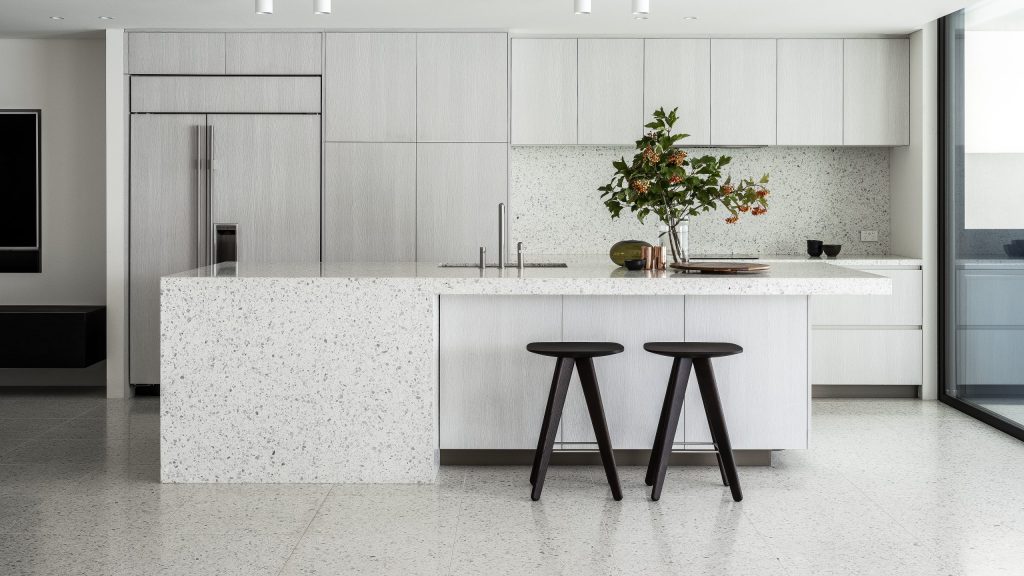
Pictured is our SB250 LIDO Terrazzo in the Kyle Bay House Project, designed by KA Design Studio. Image credit: Tom Ferguson.
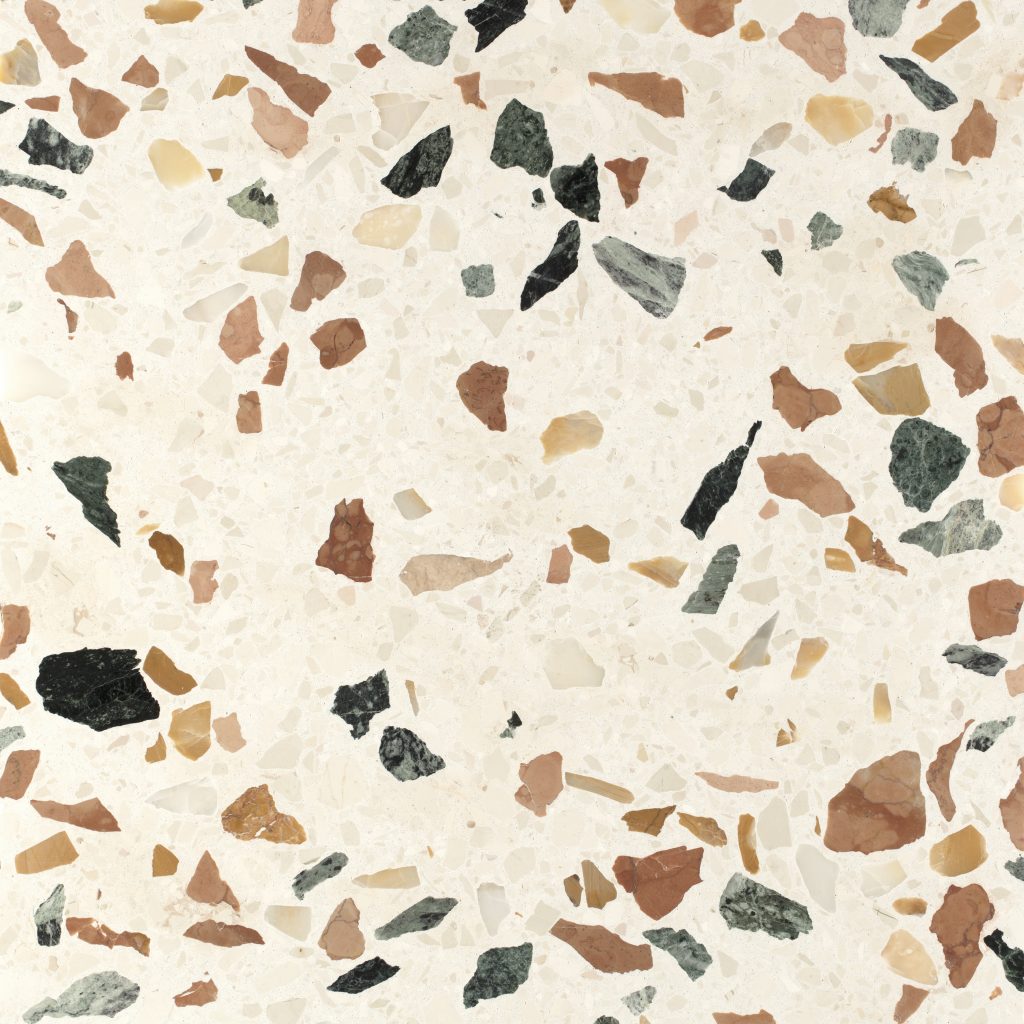
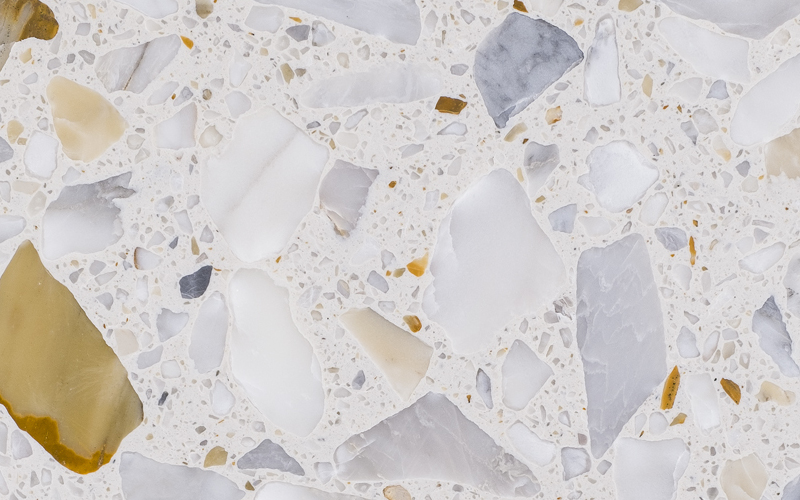
Pictured: SB210 Murano Cement Based Terrazzo (Left) Arabescato Bianco Resin-Based Terrazzo (Right).
Material Composition: Cement vs Resin
Both cement‑based and resin‑based terrazzo use natural stone aggregates, which means they behave much like marble in its natural form – susceptible to etching and staining if not properly sealed. This is particularly important to remember when specifying high‑traffic zones.
Cement‑based terrazzo: The more traditional approach, using a cement binder for a natural, matte finish with soft tonal variation.
Resin‑based terrazzo: A newer format using epoxy resin, allowing for thinner slabs, higher density, and larger aggregates.
Aesthetic Differences & Design Flexibility
Resin‑based terrazzo
- Superior structural strength (from the resin binder)
- Larger stone chips are possible due to stronger binding
- Consistent colour and pattern across slabs – ideal for large‑scale or multi‑area projects (e.g. commercial fit‑outs or large open spaces)
- Not UV‑stable – best used indoors only
- Available in full size slab and also in tile 12mm and 20mm thickness
Cement‑based terrazzo
- More organic, matte appearance
- Subtle tonal variation adds character and depth
- A perfect match for classic interiors or spaces with a natural aesthetic
- UV‑resistant – suitable for indoor and outdoor use
- Floor tiles available in an anti- slip finish
- Available in full size slab (30mm thickness) and also in tile (minimum 20mm thickness)
Installation, Thickness & Handling
Resin terrazzo is structurally stronger and lighter, with a recommended slab thickness of 20mm compared to 30mm for cement-based terrazzo. Cement terrazzo slabs are generally more fragile and can be more challenging for stonemasons to handle, whereas resin terrazzo offers greater ease of installation without compromising durability.
The handling and thickness difference can impact cost, installation time and where the material can be used, so it’s worth discussing with your installer early in the process.
Durability & Maintenance
Marble is more than just a design choice – it is an investment in timeless luxury and long-term value. Properties and projects featuring high-quality marble often command higher market value due to the material’s enduring appeal and association with prestige. Unlike synthetic alternatives, which may degrade or go out of fashion, marble remains a classic choice that enhances a space’s aesthetic and financial value.
Resin‑based terrazzo
- High‑density and impact resistant
- Low porosity, making it easier to maintain
- Not suitable for outdoor use – prone to UV discolouration
Cement‑based terrazzo
- A more natural aesthetic
- More porous, so it requires sealing (especially in wet or high‑traffic areas)
- UV-stable, making it suitable for external facades, and tiling outdoor and indoor
Despite their differences, both types of terrazzo require proper sealing and ongoing maintenance, particularly due to the marble content in the aggregate, which is susceptible to staining and etching. For detailed maintenance guidance, check our article on How to Maintain The Beauty of Natural Stone.
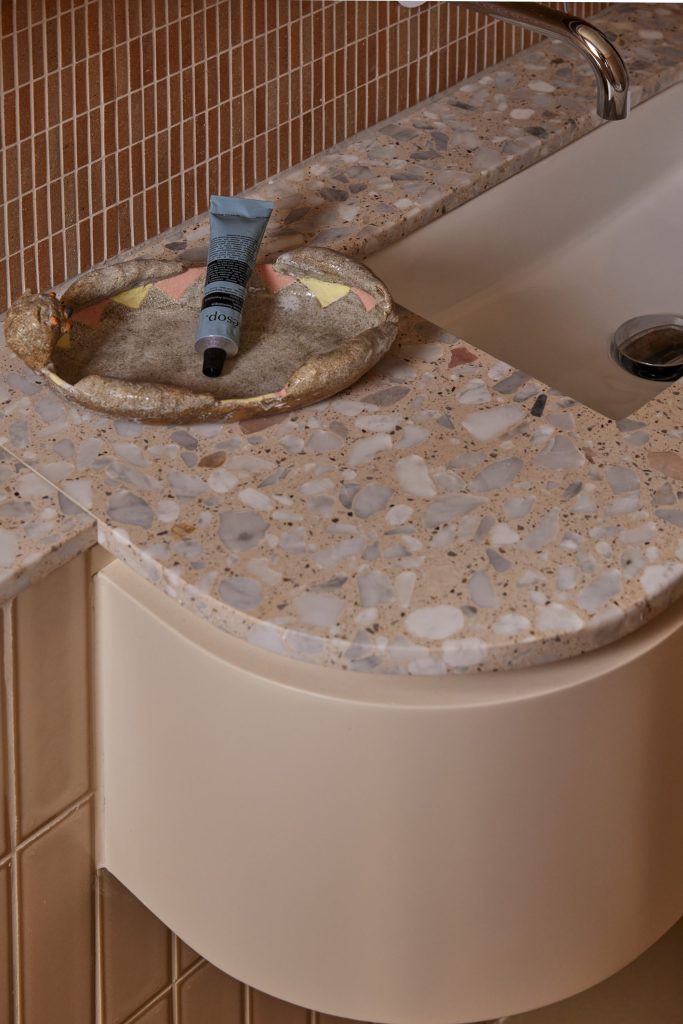
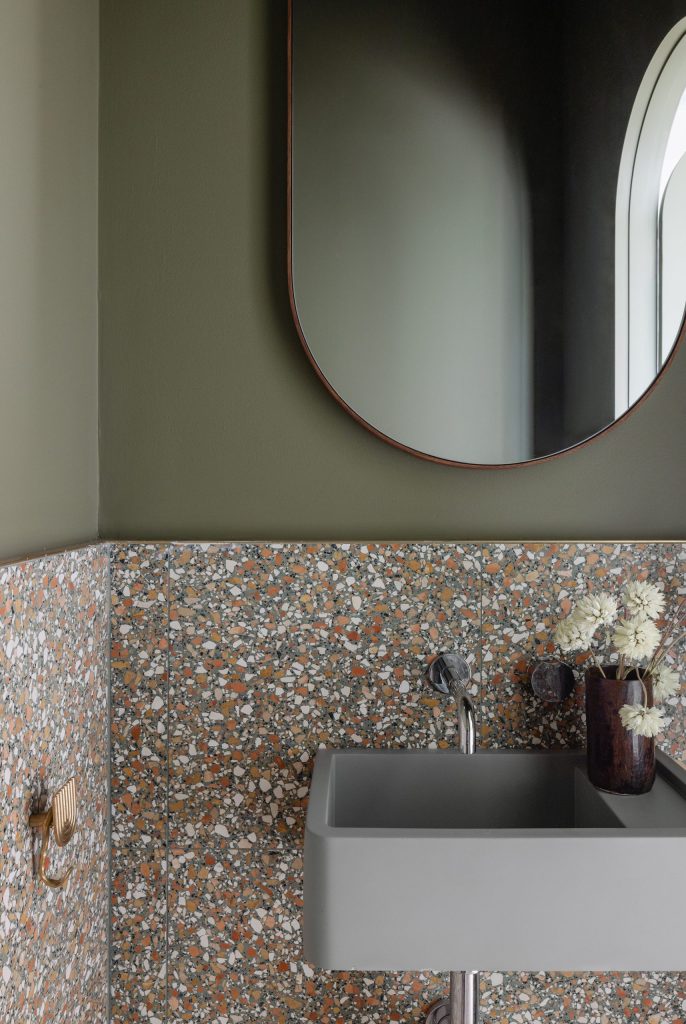
Pictured (Left) is our SB115 MULTICOLOR VERDE Terrazzo in the Arch Nouveau Project, designed by Studio Kaaki. Image credit: JKatherine Lu .Pictured (right) is our SB230 PELLESTRINA Terrazzo in the Bondi Apartment Project, designed by Studio PULP. Image credit: Jacqui Turk.
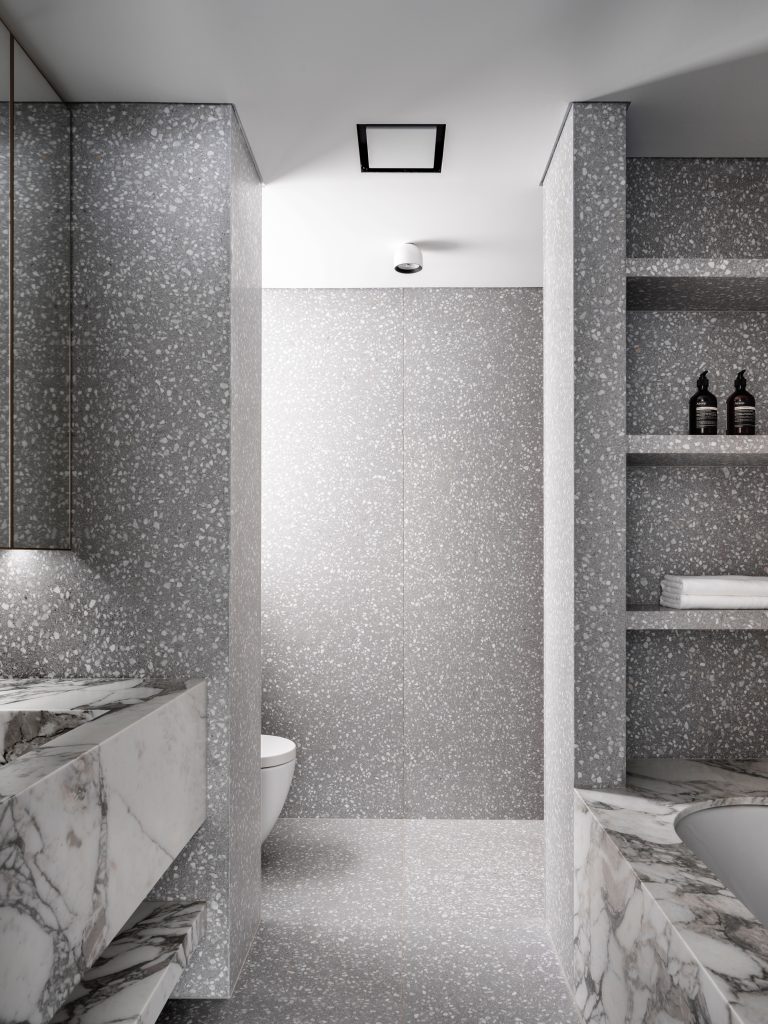
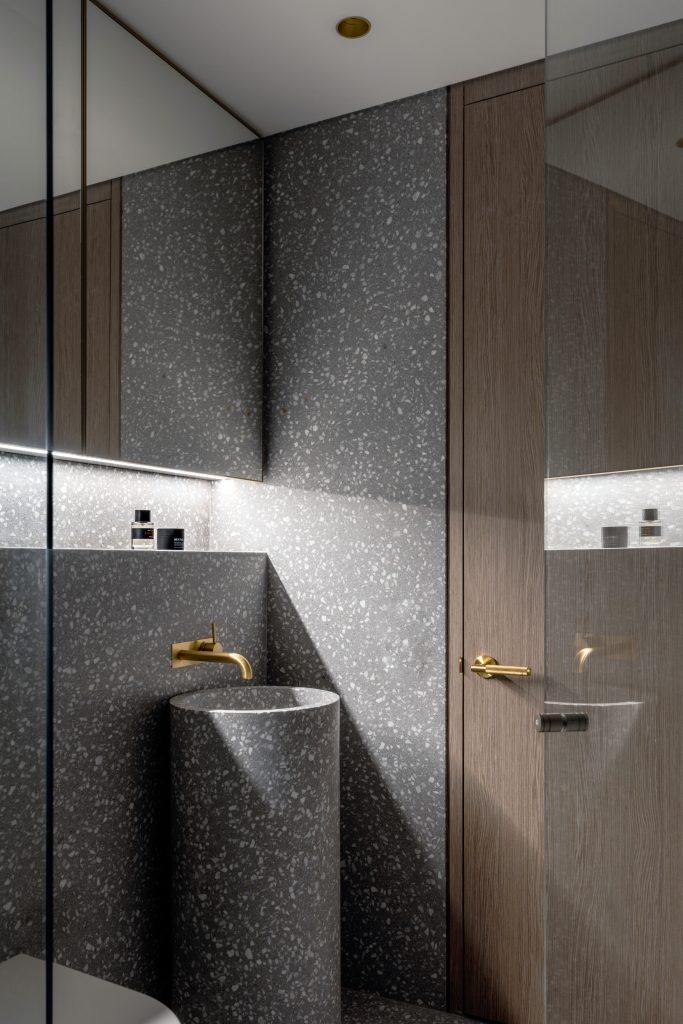
Pictured is our SB240 TORCELLO Terrazzo in the North Bondi Apartments, designed by MHNDU. Image credit: Justin Alexander.
Which Terrazzo Type Is Right for Your Project?
Choose resin‑based terrazzo for:
- Indoor‑only use
- Modern kitchens and bathrooms
- High‑traffic commercial interiors
- Projects needing uniformity across large spaces
Choose cement‑based terrazzo for:
- Outdoor settings or UV‑exposed spaces
- Projects seeking a natural, rustic aesthetic
- Areas with high moisture (provided correct sealing is applied)
- Designers favouring tonal variation and a softer finish
Worldstone’s Terrazzo Collection
At Worldstone, we proudly offer both types of terrazzo to suit every design and performance requirement.
Our cement-based terrazzo from industry leader Agglotech is highly durable, with predictable colours that ensure a consistent, uniform aesthetic and quality across every project. Produced in slab form rather than as standard tiles, it allows complete flexibility to customise tile sizes for a perfect fit. Ideal for both internal and external applications, the range also features the innovative “Stepping-Out” P5-rated antislip finish, available in all colours for added safety and versatility in wet areas and outdoor spaces.
Our resin-based terrazzo is from Santamargherita, one of Italy’s original pioneers of engineered stone, creating “modern” resin-based terrazzo in place of traditional cement. Based in the heart of Italy’s stone-producing region, they offer a sophisticated range of slabs and tiles in a wide selection of colours, trusted by designers for quality and consistency.
Explore our full range of terrazzo, including slabs and tile options.
Whether you’re designing for aesthetic impact, longevity or ease of installation, our team at Worldstone is here to help you select the right terrazzo for your space.
Book your visit to the Worldstone Showroom & Slab Gallery in Sydney to view finishes and discuss project suitability in person.
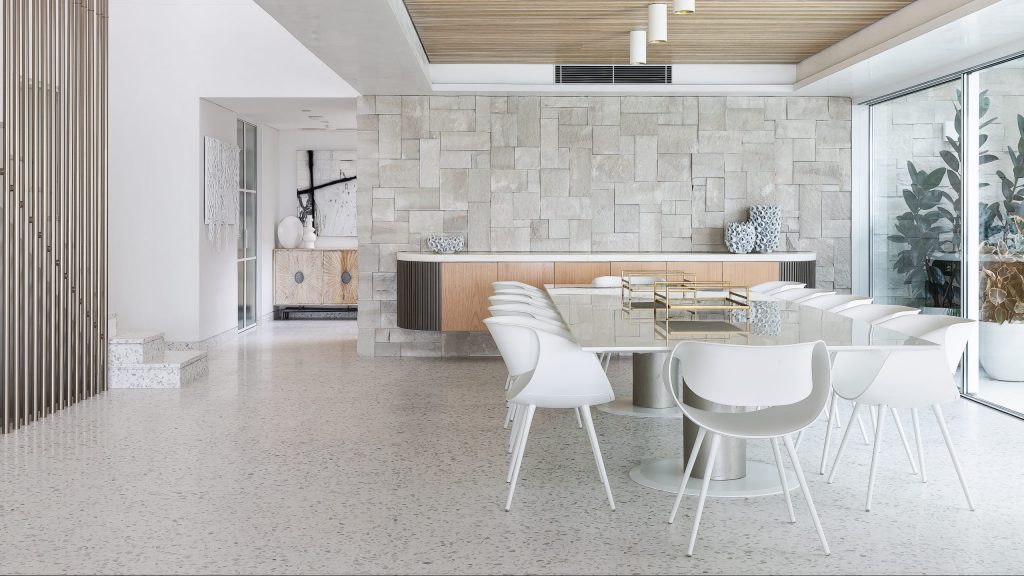
Pictured is our SB250 LIDO Terrazzo in the Mykonos Meets Miami Project, designed by Sheira Design. Image credit: Simon Whitbread.