
What Determines the Price of Natural Stone? A Guide for Designers & Specifiers
When specifying natural stone, one question consistently arises: what determines the price of one slab over another?
At Worldstone, this is often a conversation we have with architects and interior designers as they move through our showroom, comparing slabs that appear similar at first glance, yet vary in price.
The answer lies in a combination of factors, from rarity and quarry location to block quality, slab size and overall availability. Unlike manufactured materials, each natural stone slab is entirely unique, shaped by its origin and the conditions under which it was formed and extracted.
Understanding these nuances allows for more informed decisions when selecting premium stone for interior spaces.
What Factors Affect Stone Prices?
Every stage of a natural stone slab’s journey, from quarry to showroom, influences its final price. At Worldstone, each slab is carefully sourced, cut, finished and imported from stone factories around the world before arriving in our Sydney showroom.
When designers ask how much natural stone costs, the answer depends on several factors:
- Rarity and global demand: Some stones are naturally limited or highly sought-after.
- Quarry location and extraction: Remote or complex sites increase cost.
- Block quality and yield: Only the best sections produce premium slabs.
- Slab size and thickness: Larger or thicker slabs require more material and handling.
- Transport and logistics: International shipping and careful handling impact cost.
Even slabs with similar colour or veining can vary significantly in price. In the Worldstone showroom, our team helps architects and interior designers navigate these factors, translating them into informed selections that align with both design intent and project budget.
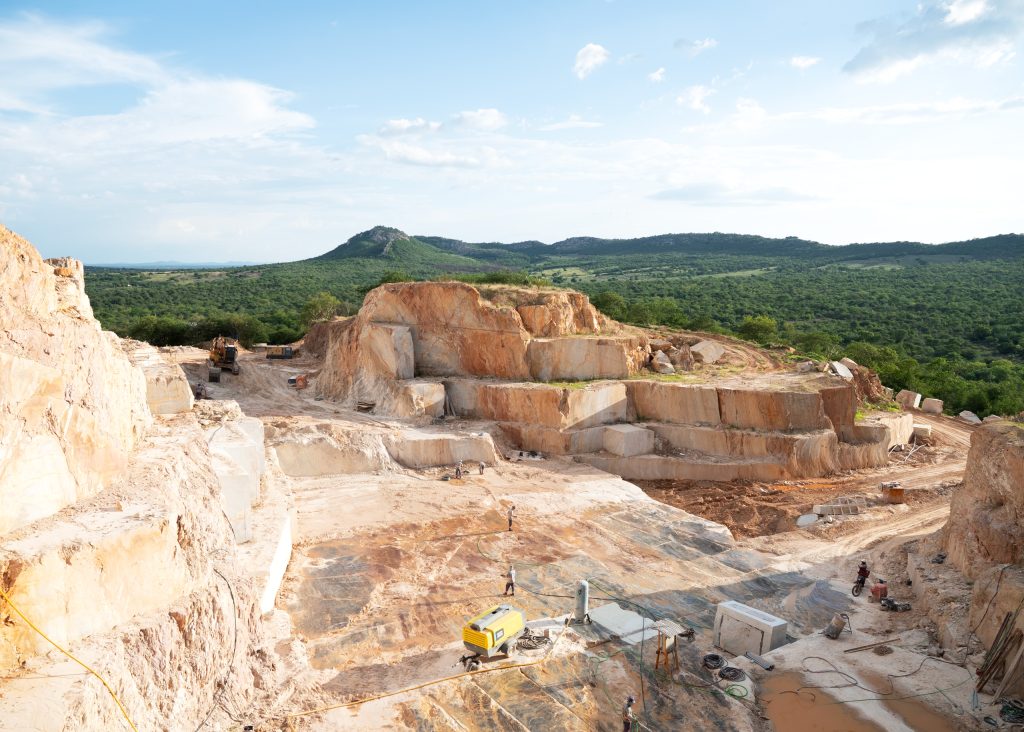
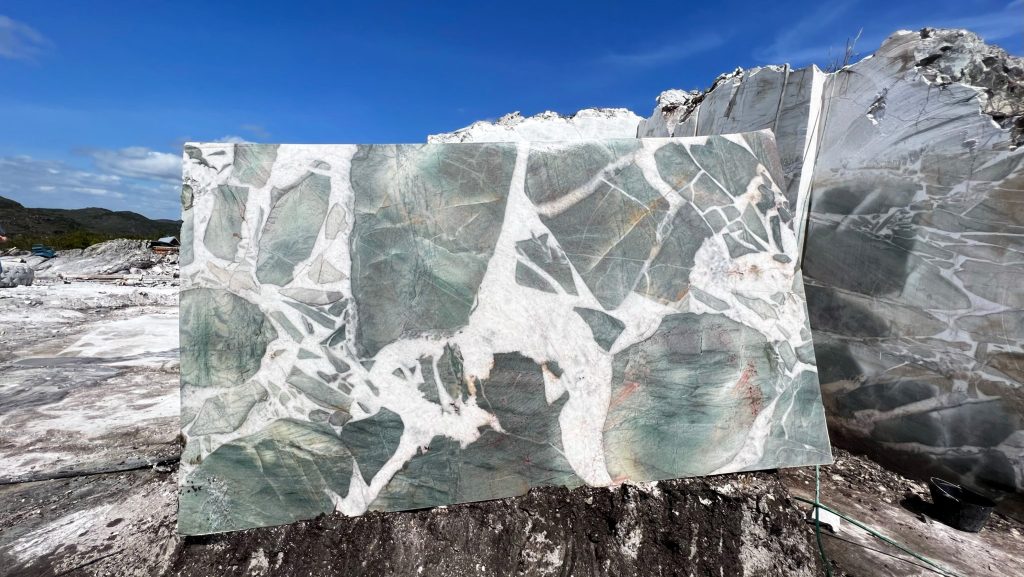
Rarity, Supply & Demand and Quarry Location
Rarity is one of the most significant factors influencing the cost of natural stone.
Some materials are quarried in large volumes and the output is relatively homogenous, while some stones the quarry characteristic is such that the stones vary significantly from block to block. Stones with dramatic veining or distinctive colour variation, such as Calacatta Oro Marble and Tempest Blue Quartzite, are often the most limited in supply, which contributes to their value. From those blocks, only a small percentage will yield natural stone slabs with the movement, colour and character sought after in premium interiors.
At Worldstone, we source and supply premium slabs from each block, prioritising the finest examples of colour, structure and veining. Many of the stones we source come from established European quarries, particularly in Italy, where generations of expertise shape both extraction and processing. When these materials arrive in the Worldstone showroom, they often represent a limited global supply, an exclusivity that appeals to designers seeking distinctive materials for their projects..
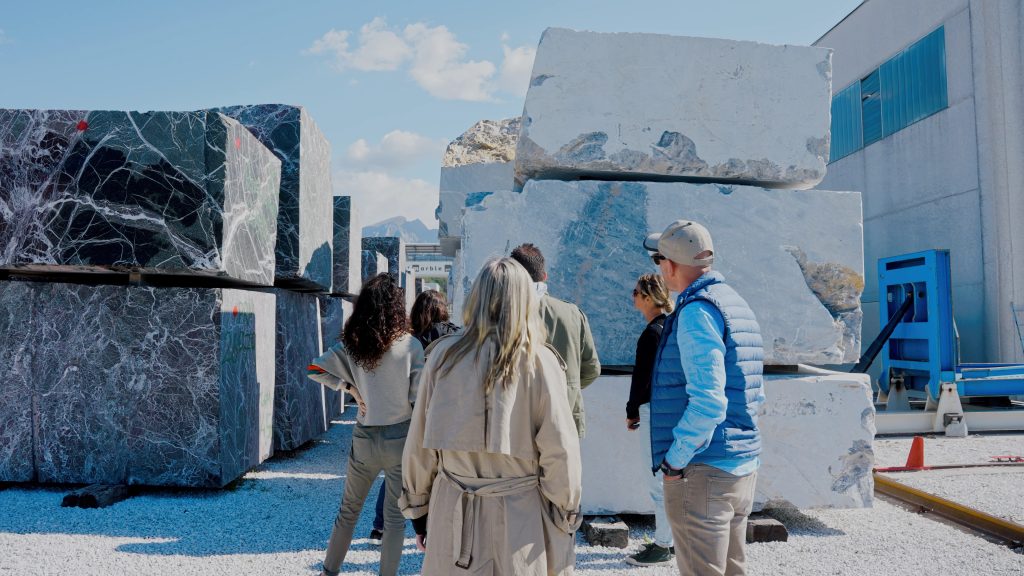
Natural Stone Slab Size and Thicknessocation
The size and thickness of a natural stone slab also play an important role in pricing. Larger slabs naturally contain more material but they also require larger blocks, which are more difficult to extract without fractures or imperfections. As a result, slabs with generous dimensions are often more valuable, particularly when they allow designers to create seamless surfaces such as expansive kitchen islands, continuous benchtops or large wall panels. Importantly, size alone is not the sole determinant of value; the aesthetic characteristics of the slab are equally significant. Elements such as pattern balance, colour variation, and the quality of the background colour work together to define its visual appeal and ultimately its worth. Large-format slabs with minimal visual interest may be less desirable, whereas those that combine scale with exceptional natural movement, tone, and patterning are rarer, more versatile, and therefore more highly valued in design applications.
Thickness can also affect cost. While most interior applications use slabs around 20mm or 30mm, thicker slabs require additional material and processing.
At Worldstone, each slab is carefully assessed as it arrives in the showroom, with its scale, structure and visual movement helping determine how it is priced and specified for different projects.
Why Working with an Expert Marble Stone Supplier Matters
At Worldstone, we work closely with architects and interior designers as a trusted marble stone supplier. We guide the stone selection process, from understanding the origin of each material to choosing slabs suited to a project’s scale and application.
Our team helps clients navigate:
- The most suitable application for each stone
- The factors influencing its price
- How to select slabs that align with the design intent of a space
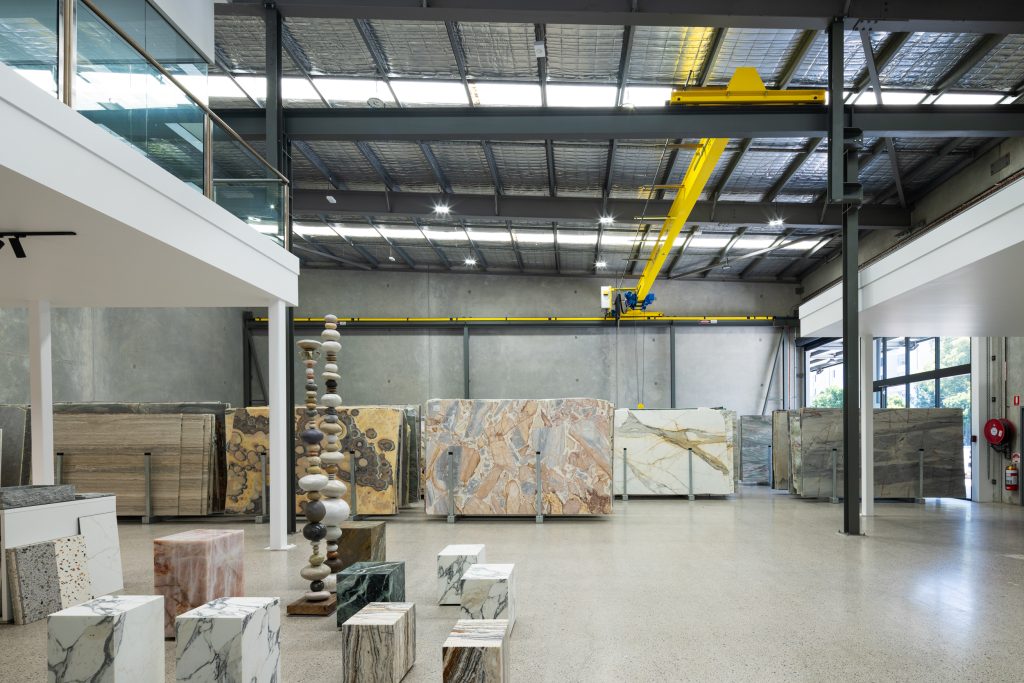
Viewing full natural stone slabs in person is an important part of this process. In the Worldstone showroom, designers can fully appreciate the depth, veining and movement that make natural stone such a distinctive material.
In many projects, the stone becomes a defining feature, from kitchen islands and bathroom vanities to statement wall surfaces. When thoughtfully sourced and carefully specified, premium stone for interior spaces offers a timeless quality that few materials can replicate. At Worldstone, our role is to curate these exceptional stones and share them with the Australian design community.
We invite architects and interior designers to book a showroom appointment at Worldstone. Our team can guide you through the latest natural stone arrivals and help select the right slabs for your project. Explore the full collection available in our Sydney showroom.
Summary FAQ
What determines the price of natural stone?
The price of natural stone depends on rarity, quarry location, block quality, slab size and global demand.
How much does natural stone cost?
Natural stone pricing varies significantly depending on the material and slab characteristics.
Why do some natural stone slabs cost more than others?
Factors such as rarity, extraction complexity, slab size and finish can influence price.
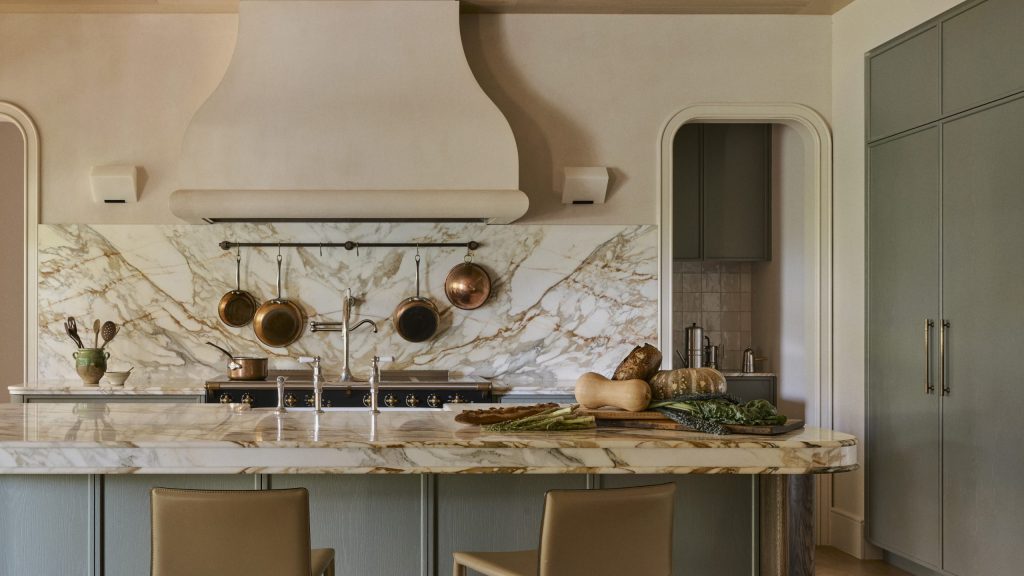
Pictured is our Calacatta Borghini Gold Marble – Golden Light by Arent & Pyke | Photographer: Anson Smart